
Lyophilisation, also called freeze-drying, is a process that removes water from a material while keeping its structure intact. Most research peptides are supplied this way, as a dry powder or “cake” sealed in a glass vial.
How freeze-drying works
- Freezing — the material is frozen solid.
- Primary drying — under vacuum, the frozen water turns directly from ice into vapour (sublimation) and is removed.
- Secondary drying — remaining bound moisture is removed, leaving a dry, stable solid.
Why research peptides are lyophilised
Removing water slows the chemical processes that can degrade peptides over time. A lyophilised product is generally more stable in storage and transit than the same material in solution, which helps it arrive in the condition stated on its certificate.
What it should look like
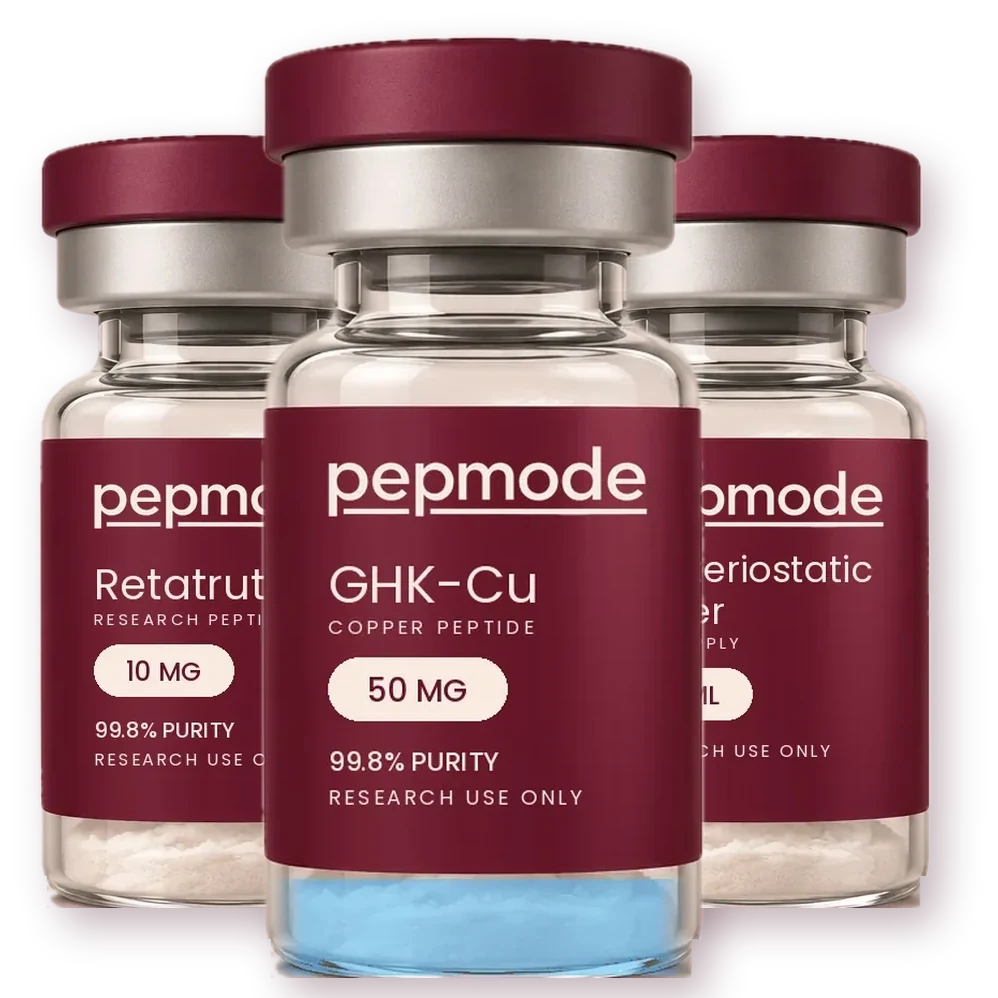
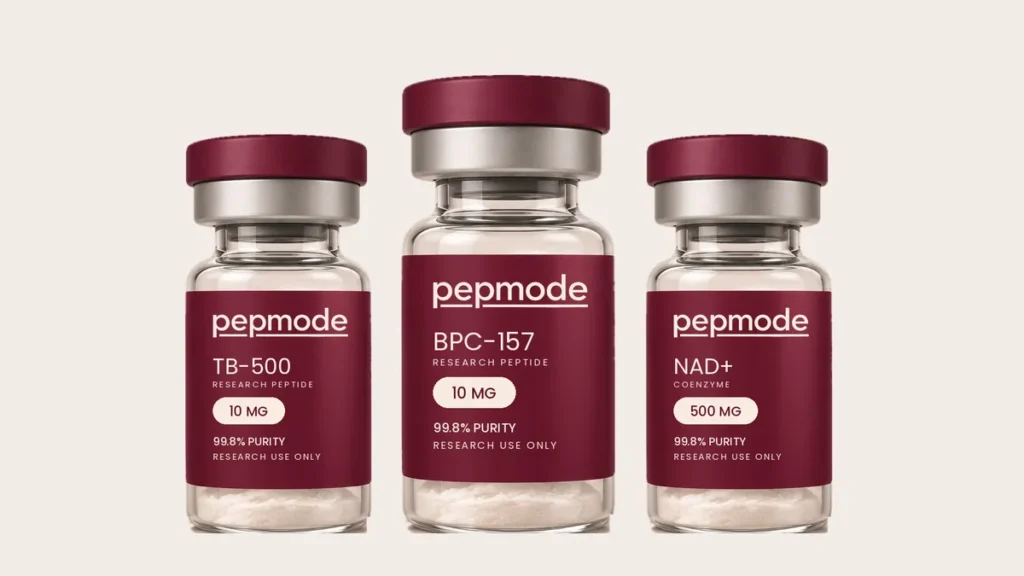
Lyophilised material usually appears as a white to off-white powder or compact cake. Some compounds have their own colour — GHK-Cu, for example, is blue because of its copper content. The amount of visible material can look small; net content is measured by weight, not volume.
Storing lyophilised vials in the lab
- Store at 2–8 °C, as stated on the label.
- Protect from light — keep vials in their packaging or a dark container.
- Keep vials sealed until they are used in the laboratory.
- Record the product, order date and expiry date in your lab records.
Pepmode stock is cold stored and protected from light before dispatch. See Quality & Testing for how each batch is handled.